
Graciela Arias
GRACIELA ARIAS
Perú, 1969
Graciela Arias Salazar is a Peruvian visual artist who has lived in the city of Pucallpa since an early age. Her connection to the Amazonian natural environment has been fundamental in shaping both her artistic sensitivity and the development of her visual language. From the beginning of her career, her work has been deeply influenced by a close relationship with nature and with the cultural expressions of the Peruvian Amazon
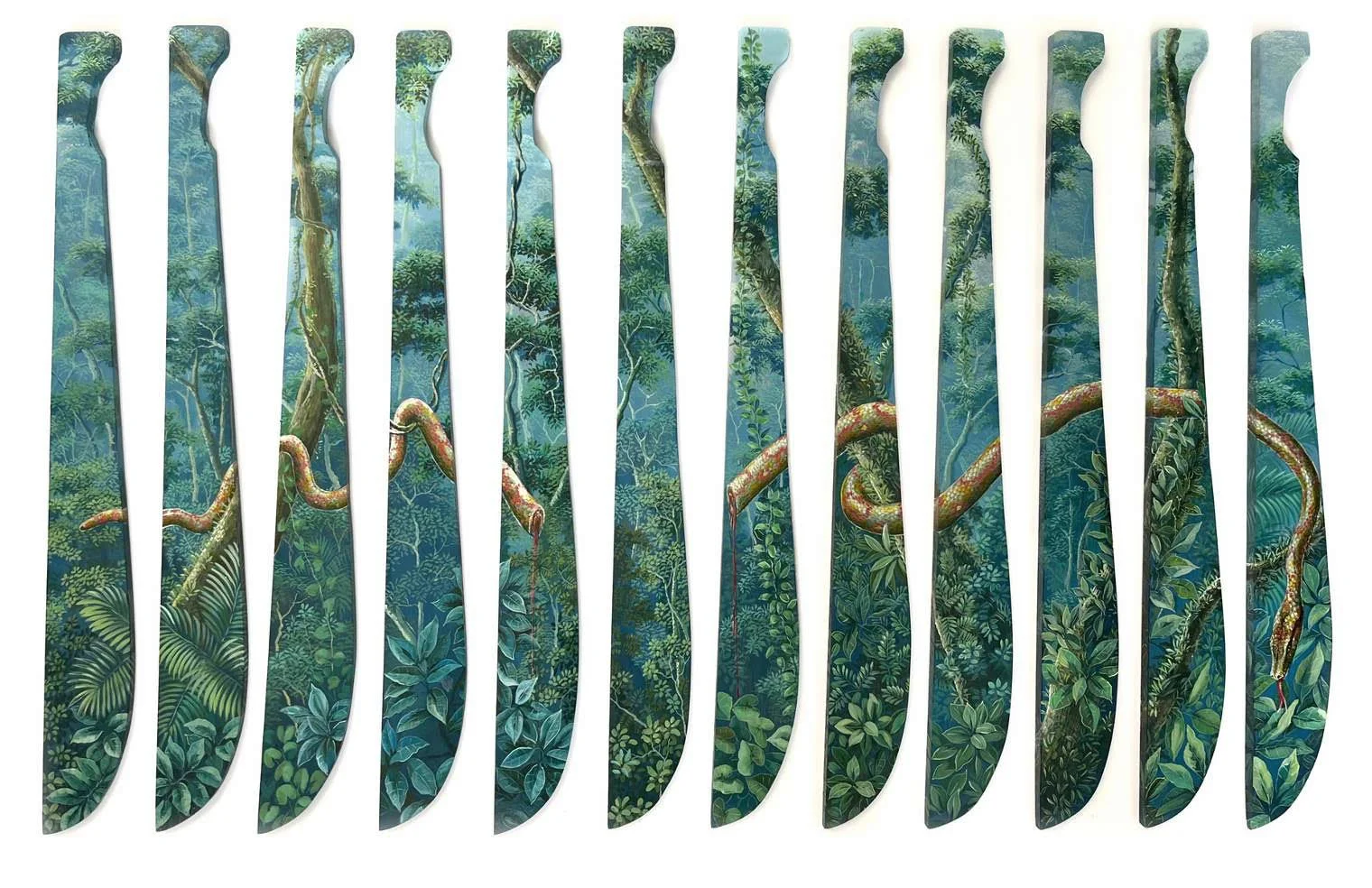
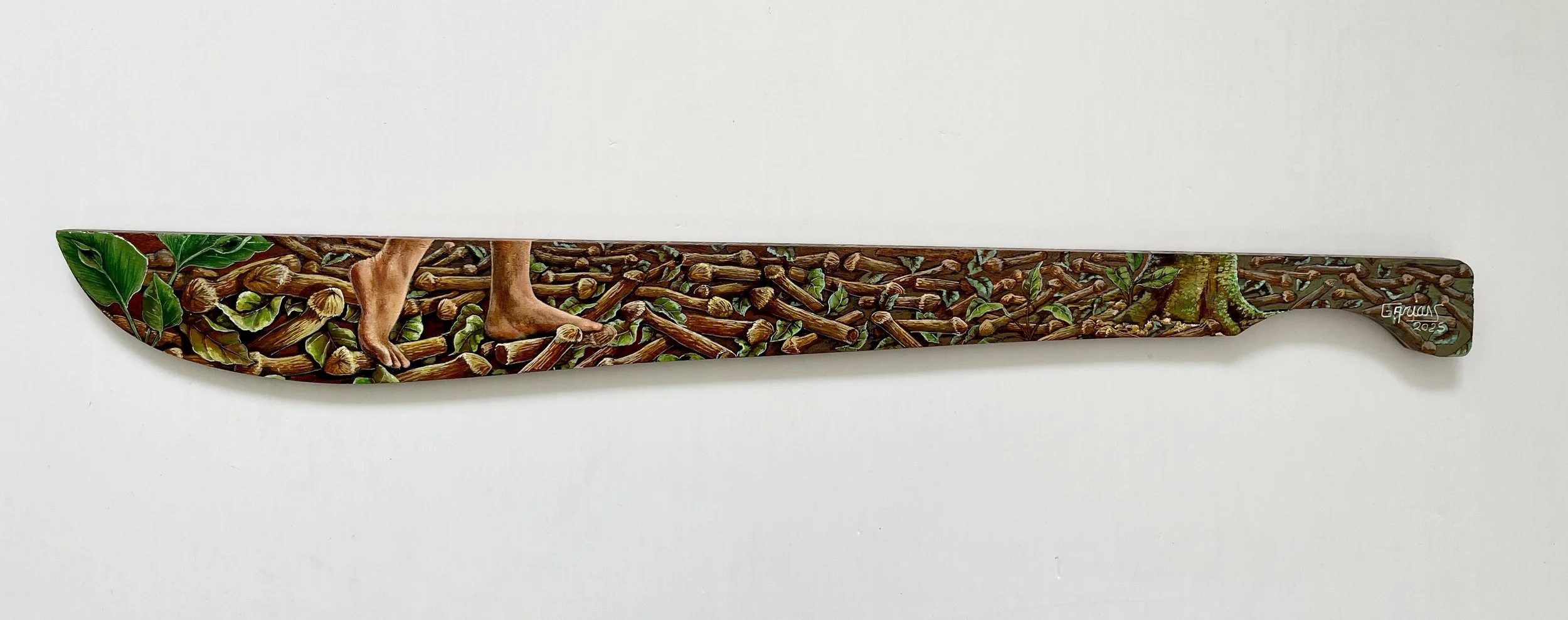
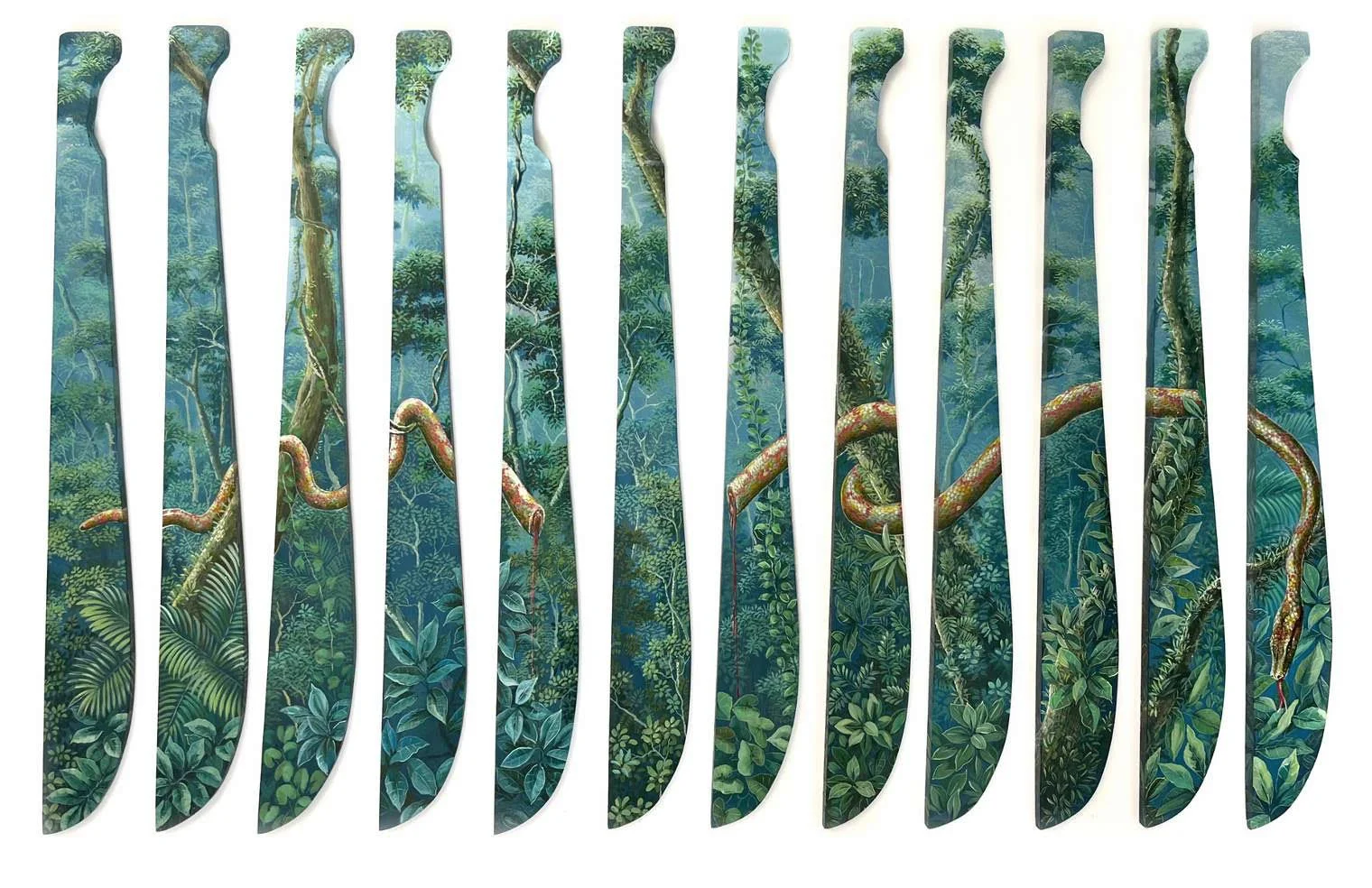
“One day we went to my chacra by the river, in the upper region of Ucayali,” she recalls. “Suddenly, along our path, a snake taller than us rose up, with a color I had never seen before — orange, like fire.” In that critical moment, a machete was quickly raised to cut a branch, scaring away the snake and saving them from a fatal outcome. “Since then, I began to value the machete as an essential tool,” she explains, revealing why she now uses this object as a canvas in her artistic practice.
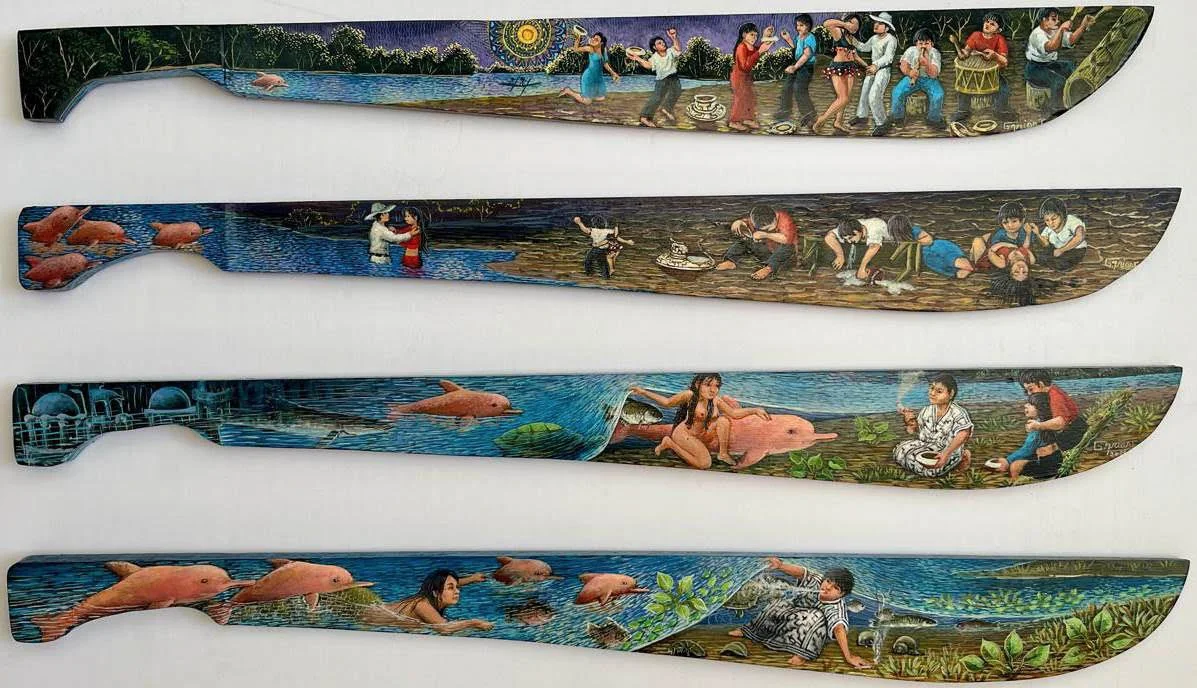
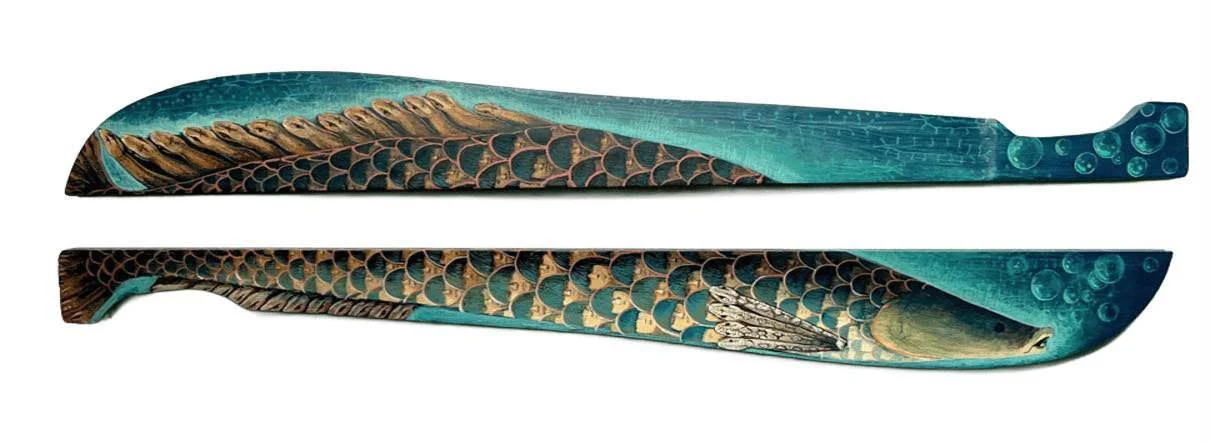
That experience profoundly marked her artistic path and gave rise to her first series of painted machetes, presented in the solo exhibition Hacedora de sueños in 2015 at the Municipality of Miraflores. From that moment on, she began to reinterpret this everyday object, transforming it into a symbol of construction, memory, and creation rather than violence or destruction. “With a machete you can open paths and build an entire town,” she reflects. “You can build a house, cut meat, fish… it is a tool that makes all your dreams possible.”
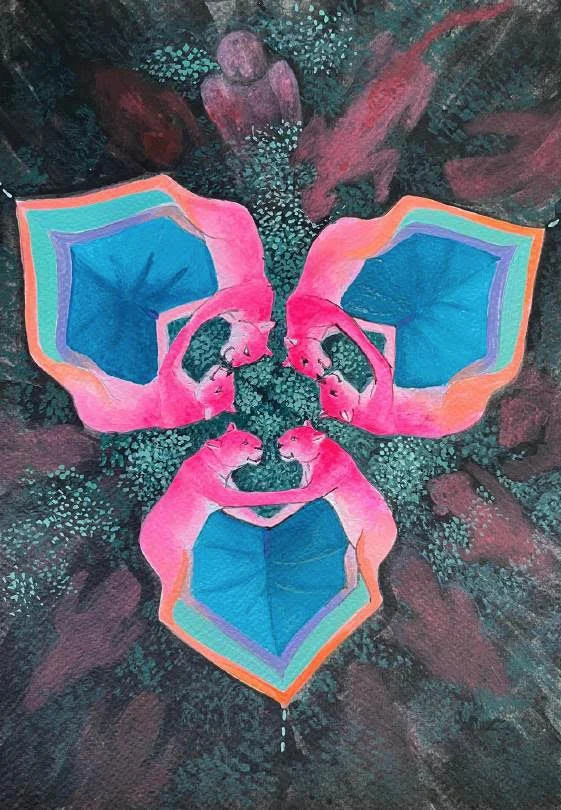
Graciela’s work is characterized by a constant exploration of materials, formats, and narratives connected to the Amazon. Her works range from small-scale pieces to large canvases over two meters long, and also include full-size canoes and cantoneras as artistic supports. Through these mediums, she explores themes such as Shipibo-Konibo mythology, the role of women within Indigenous communities, and the tensions between the Amazon and the contemporary world. Among the stories and legends she has visually reinterpreted are The Birth of Yarinacochas, The Myth of Cumancaya, and The Myth of the Otorongo.
“I work a lot with Shipibo-Konibo themes because they are very present here in Pucallpa,” she explains. “I have heard countless stories from them, and even today I love sitting at night to listen to the stories told by the wisest men and women of the community. They are not always myths sometimes they are everyday stories and even so, I can say they are extraordinary.”
Graciela’s art proposes a visual journey through the Amazon and its symbolic universes, inviting viewers to engage with its myths, traditions, and forms of knowledge. Her work also highlights the strength, memory, and wisdom of Amazonian women. In a world where Indigenous voices continue to be frequently marginalized, her artistic practice becomes a contemporary form of memory and resistance, reminding us of the importance of protecting both natural heritage and the traditional knowledge that forms an essential part of our cultural identity.