
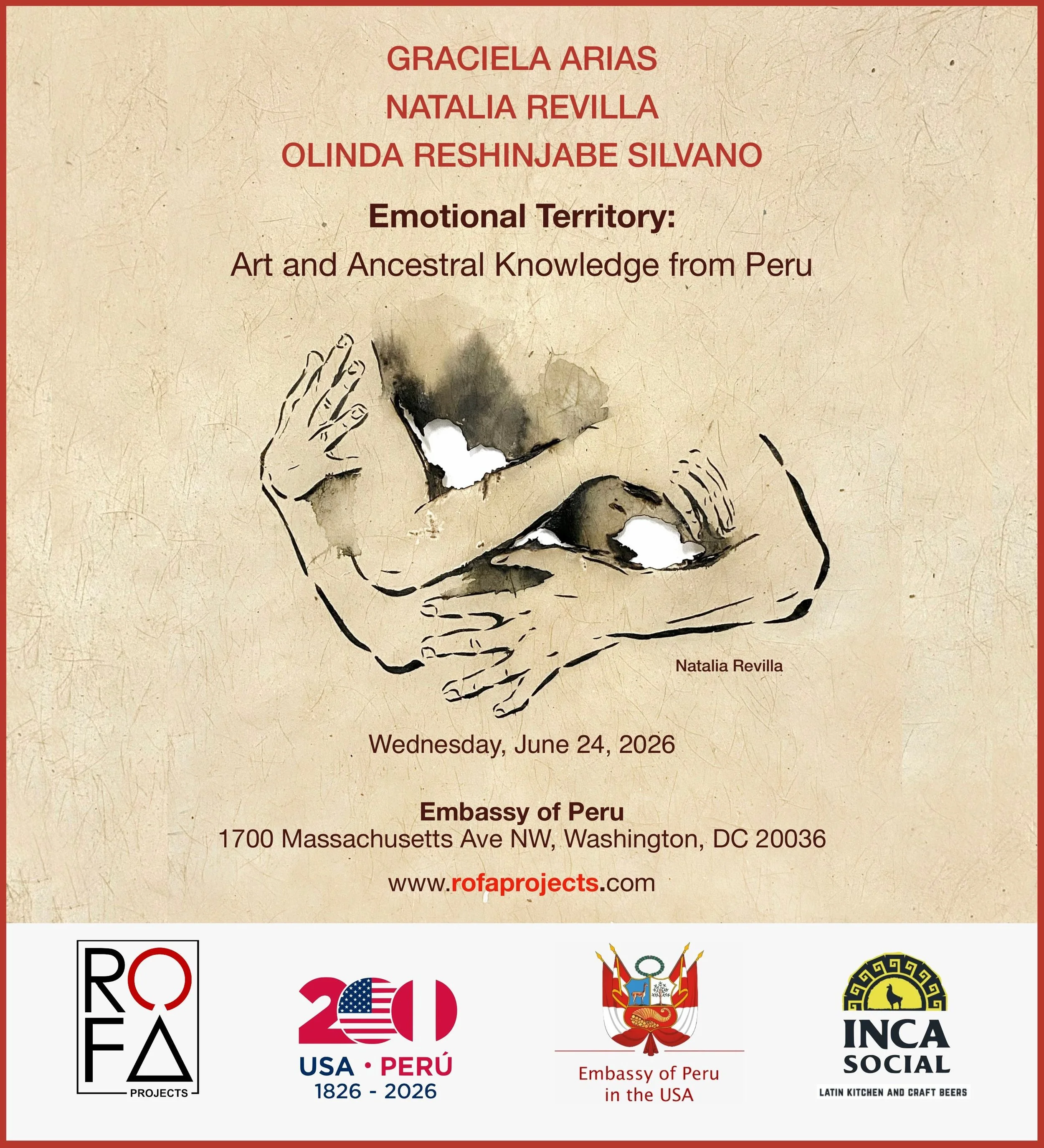
Emotional Territory: Art and Ancestral Knowledge from Peru
Embassy of Peru
1700 Massachusetts Ave NW, Washington, DC 20036
June 24 - July 24 , 2026
Artists
Emotional Territory: Art and Ancestral Knowledge from Peru
This exhibition brings together the practices of Olinda Reshinjabe Silvano, Graciela Arias Salazar, and Natalia Revilla, three Peruvian artists whose works establish a profound dialogue between territory, memory, spirituality, and ancestral knowledge. Through diverse visual languages and materials, the artists explore forms of connection between human beings, nature, and the cultural structures that shape identity and collective experience.
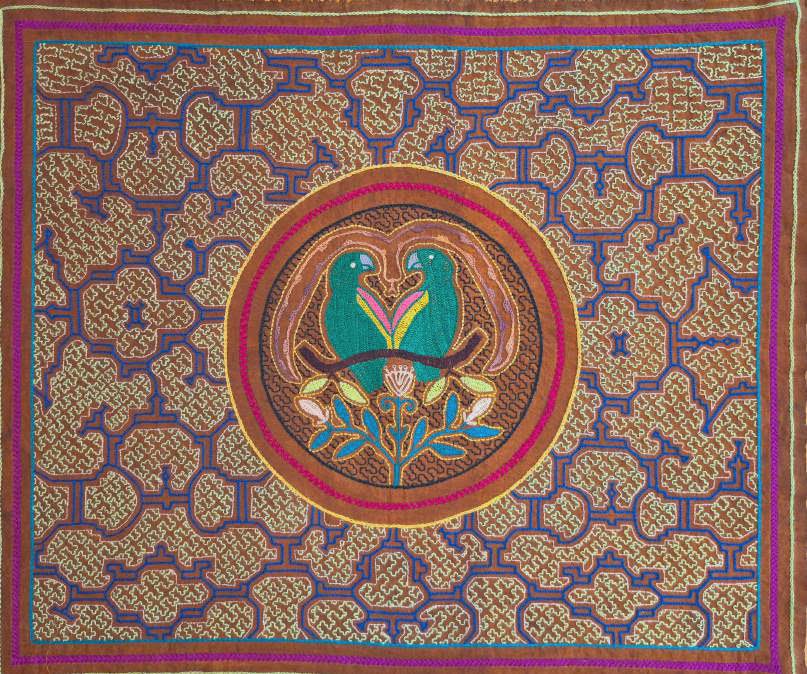
The works presented reveal how territory is not only a physical space, but also an emotional, symbolic, and spiritual ne, shaped by histories, displacement, worldviews, and forms of resistance. From the visual and spiritual systems of kené and the Shipibo-Konibo tradition to contemporary reflections on language, memory, extractivism, and belonging, the exhibition proposes a sensitive perspective toward forms of knowledge that remain alive and in constant transformation.
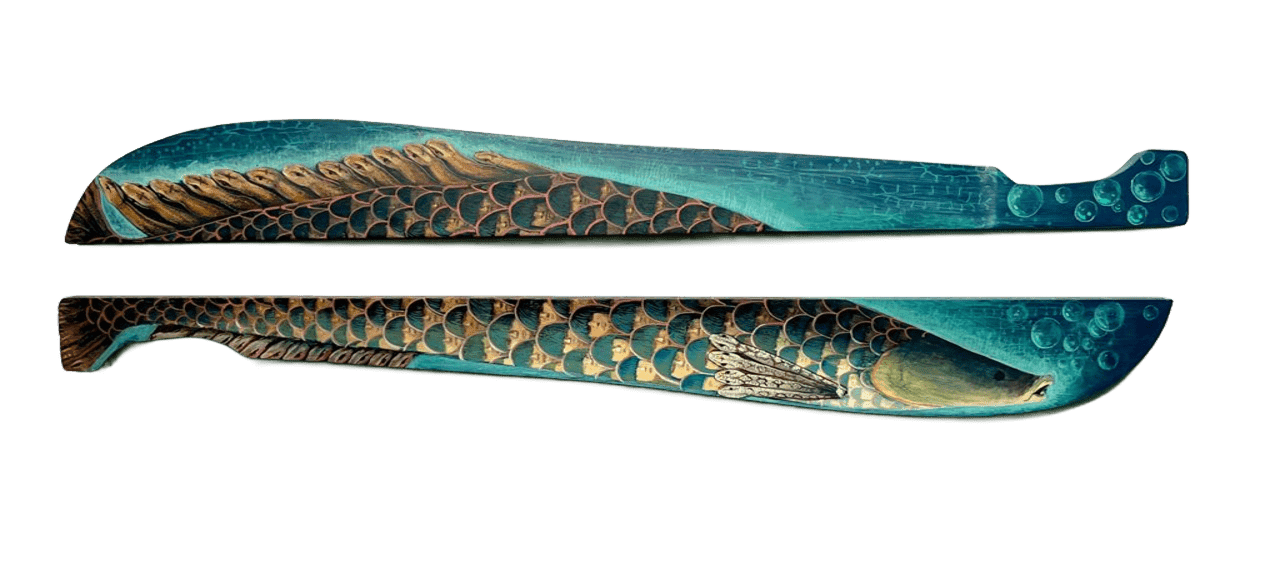
In the practices of Olinda Reshinjabe Silvano and Graciela Arias Salazar, the forest, plants, oral traditions, and ancestral designs function as living archives of knowledge and as forms of cultural transmission. Their works invite viewers to understand the relationships between body, nature, and spirituality through perspectives deeply connected to Amazonian communities and their ways of inhabiting the world.
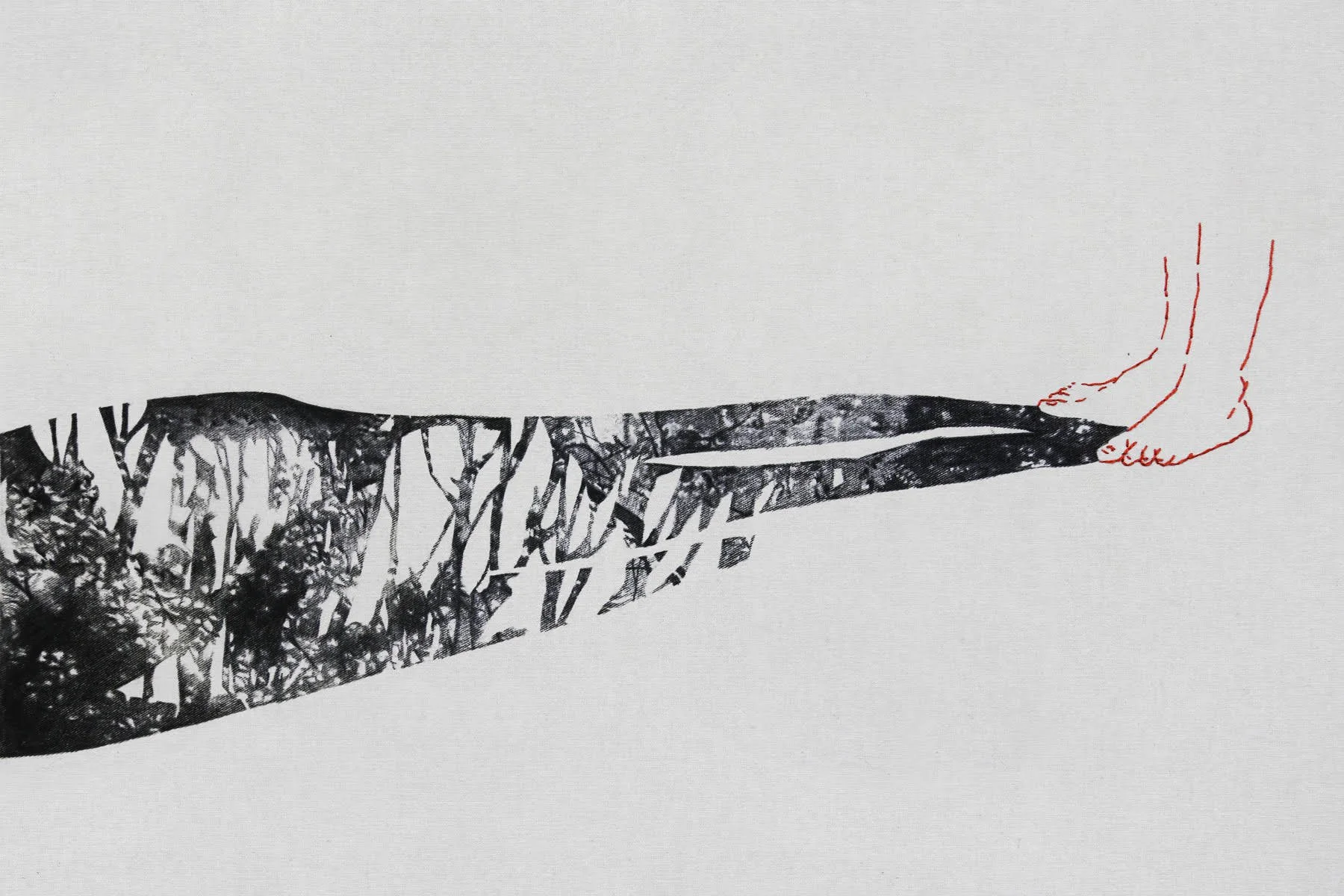
In the case of Natalia Revilla, her work investigates the tensions between territory, identity, and language, developing a practice that reflects on the relationships between memory, landscape, and the multiple forms of communication and existence present in contemporary Peru. Her work incorporates references to some of the country’s Indigenous languages, including traditions connected to Murui-Buue, Matsigenka, Ese Eja, and Awajún, as well as the broader Quechua cultural universe, proposing new ways of thinking about the relationship between sensitivity, territory, and sustainability.
The exhibition also recognizes the important role of women within diverse Indigenous communities in Peru, where female leadership continues to strengthen processes related to education, cultural transmission, women’s empowerment, the protection of victims of violence, and the preservation of collective identity.
Emotional Territory: Art and Ancestral Knowledge from Peru proposes a journey where art and knowledge intertwine to create spaces for reflection on belonging, cultural memory, and preservation. The exhibition seeks to recognize the
value of ancestral knowledge not as elements of the past, but as living forms of knowledge capable of engaging with the present and imagining more sensitive, diverse, and sustainable futures.
Gabriela Rosso