Living Connections: Art and Knowledge in the Peruvian Amazon
IDB - Inter-American Development Bank
1300 New York Ave NW, Washington, DC 20577
June 26 - July 24, 2026
Artists
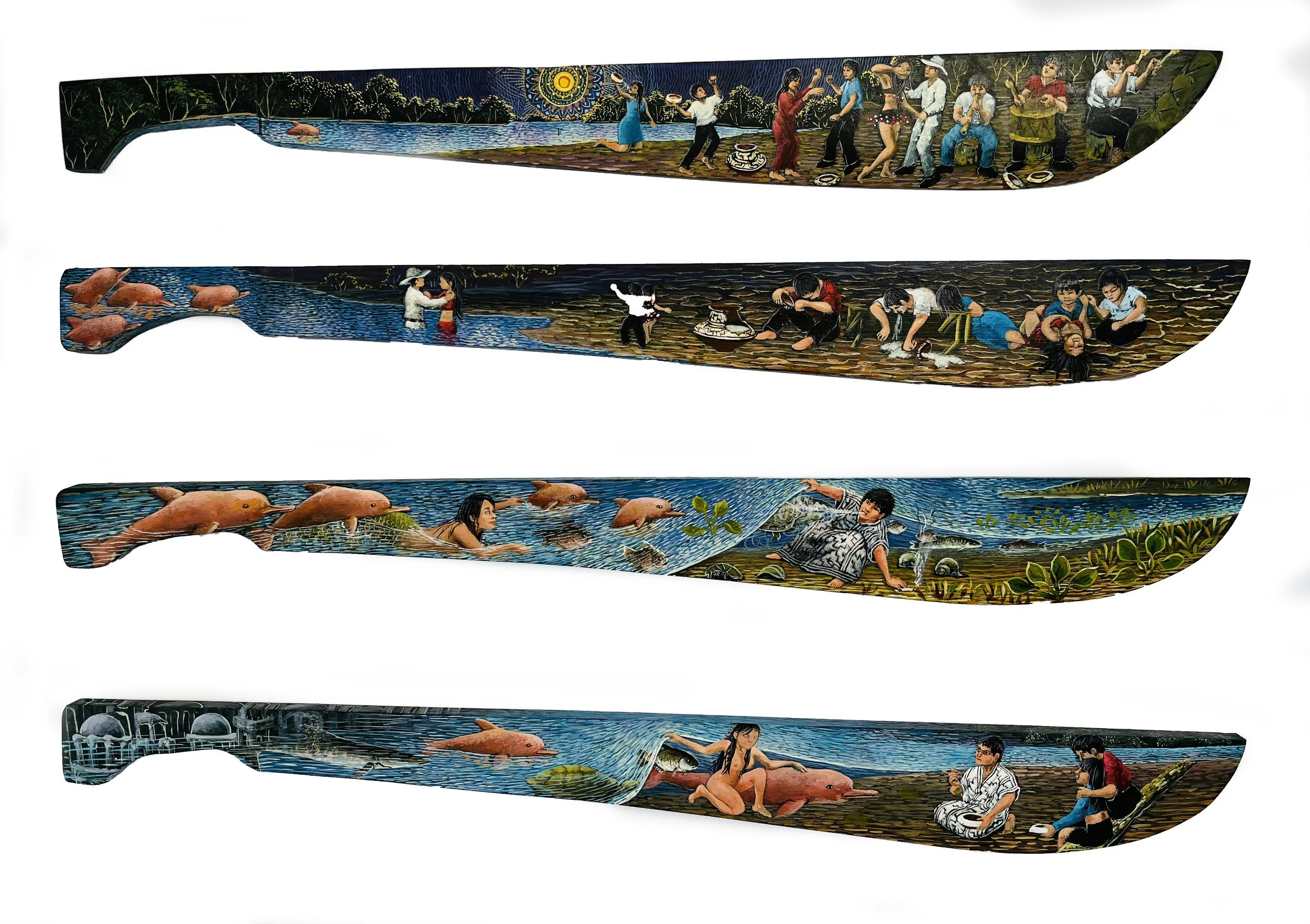
Living Connections: Art and Knowledge in the Peruvian Amazon
The Peruvian Amazon cannot be understood solely as a geographical territory. It is a space of relationships where languages, memories, ancestral knowledge, ecosystems, and human experiences intertwine to form complex networks of life. Within these worldviews, nature is not a realm separate from humanity, but rather a community of connections in which plants, rivers, animals, spirits, and people participate in a shared existence.
The works of Natalia Revilla, Olinda Reshinjabe Silvano, and Graciela Arias Salazar invite us to approach this relational understanding of the world from three complementary perspectives.
Natalia Revilla explores the connections between territory, memory, nature, and knowledge through sustained research into Indigenous worldviews and several of Peru’s 48 Indigenous languages. Her work reveals how language not only names reality but also shapes and transmits it. Concepts emerging from Amazonian languages, including traditions associated with the Murui-Buue, Matsigenka, Ese Eja, and Awajún communities, as well as the Quechua cultural universe, offer ways of understanding the interdependence of living beings that challenge traditional divisions between nature and culture.
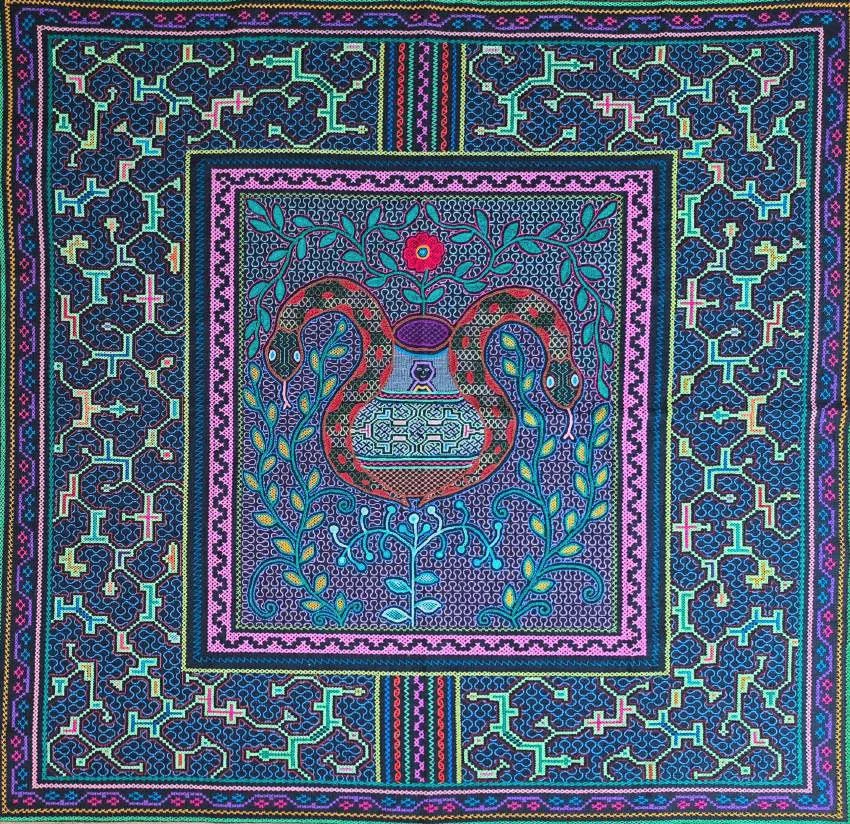
In Olinda Silvano's work, these relationships take on a visual dimension through kené, the ancestral design system of the Shipibo-Konibo people. More than an aesthetic expression, kené constitutes a cartography of knowledge: a visual language that makes visible the connections between human beings, territory, spirituality, and the forces that sustain life.
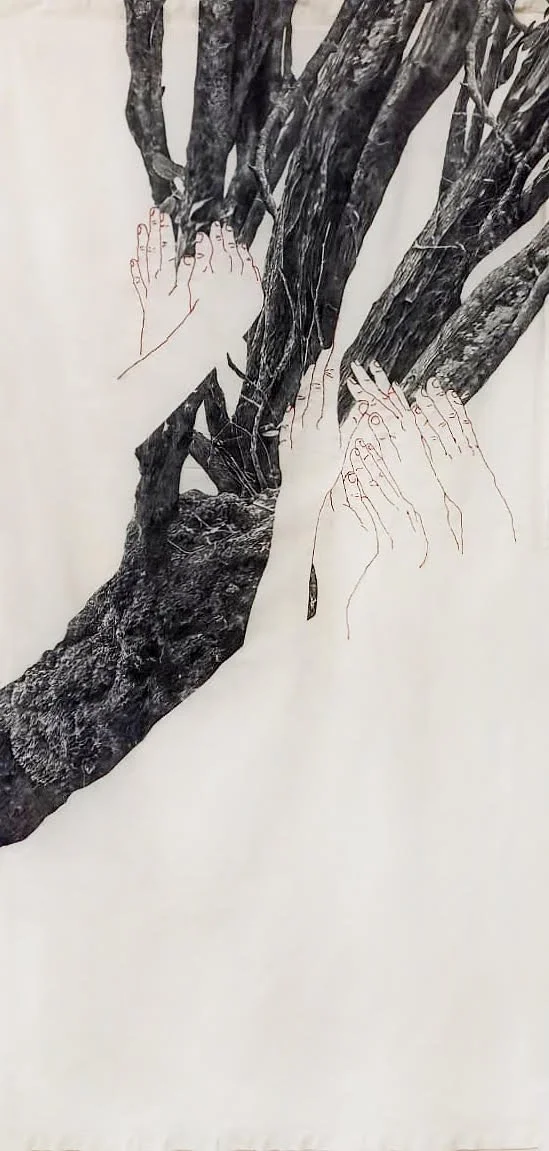
Graciela Arias Salazar brings the dimension of cultural memory and Amazonian female experience into the conversation. Her works position women as bearers, guardians, and transmitters of knowledge, revealing how collective identity is shaped through stories, traditions, and shared experiences that connect generations and communities. The exhibition also highlights the fundamental role played by women in numerous Indigenous communities throughout Peru, where their leadership actively contributes to the intergenerational transmission of knowledge, cultural strengthening, education, the protection of vulnerable populations, and the preservation of collective identities.
Together, the three artists demonstrate that knowledge can be expressed through language, image, the body, memory, and territory. Their artistic practices invite us to understand the Amazon not only as an ecosystem of extraordinary biodiversity, but also as a living network of relationships in which everything exists in connection, reminding us that biological diversity and cultural diversity are part of the same living heritage that deserves to be heard, protected, and celebrated.
Gabriela Rosso